American President Barack Obama with Japanese Emperor Akihito.
In the second section of John W. Dower's book, Embracing Defeat, the author looks at how Japan was being occupied by the victorious Americans, and how the victors infused ideas of democracy and freedom into the indigenous population. The author also mentions that a place called 'Little America' was created within the few square miles of downtown Tokyo that had been spared by the air raids. Dower also highlights that it was essential to get at the individual Japanese and remold his ways of thinking and feeling to enhance appreciation of freedom after Japan has started to rebound from the loss in the war. The author notes that between October 1st of 1945 and December 31st of 1946, over 5.1 million Japanese people returned to their homeland. He also includes that Japan was occupied and was forced to 'Americanize' their cultures and their cities. Dower examines this democratic revolution by the American's and the victorious Allied Powers Japanese-American relations will only become better as time progresses.
and states that it was seen as a 'revolution from above'. Many cartoonists depicted the American's as omnipotent and godlike, and they frequently resorted to a virtually identical 'hand of God' iconography by depicting little Japan in the palm of the Allies, or receiving MacArthur's orders from on high. Dower points out that this revolution from above received an early endorsement from Tokuda Kyuichi, a fiery communist party leader who had been imprisoned for eighteen years. Kyuichi's declarations would become a point of embarrassment to the Communists, who lamely rationalized Tokuda's words by pointing out that his thanks to the 'Allies' for liberating the world from fascism and militarism and for opening the way for the democratic revolution in Japan included the Soviet Union. Dower closes the section by noting that
Essential Question: Should the U.S. have invaded Iraq?
Claim: No, the U.S. should not have invaded Iraq.
Troops in action in Iraq.
Reason: The war in Iraq was a waste of money, and the U.S. could have spent the money for better causes. In Iraq, Afghanistan, and Pakistan combined we have spent a total of 3.2-4 trillion dollars. The exact cost spent in Iraq is undetermined, but it is estimated to be somewhere near 1.7 trillion dollars according to the Brown University's Watson Institute for International Studies. Instead of spending it on a fruitless effort in the Middle East, America could have spent this money on domestic issues or to help fix the heavy debt the US is in.
An image of Tokyo after being firebombed during World War II.
In the first section of John W. Dower's war book, Embracing Defeat, he describes the scene of Japan soon after they have surrendered in World War II. Dower opens the section with the broadcasted speech from Emperor Hirohito saying that Japan had lost the war. The author emphasized how sincere the emperor sounded over the radio, and how Hirohito proceeded to offer himself as the embodiment of the nation's suffering. Dower also states that some Japanese citizens even felt shame and guilt for not living up to their sovereign's expectations. In addition, he points out how some people felt so much guilt and grief that they kneeled in front of Emperor Hirohito's palace and bowed in sorrow. Another major point that Dower addresses is how much destruction Japan has endured during the deadliest war in history. 1.74 million soldiers died in combat, but including civilian deaths, this total rises to at least 2.7 million lost lives in Japan, with millions more injured or ill. It is also estimated that the Allied assault on shipping and the bombing campaigns against the home islands destroyed one-quarter of the country's total wealth. Sixty-six major cities in Japan were heavily bombed, including Tokyo, Osaka, and Nagoya, which were the three largest cities in Japan at the time. The author informs the reader that sixty-five percent of all residences were destroyed in Tokyo, and in Osaka and Nagoya, the figures were 57 and 89 percent respectively. All of these destroyed houses caused 9 million people to become homeless, and these people were forced into dugouts and flimsy shacks, or in some cases these people were sleeping in hallways, subway platforms or on sidewalks. In addition to these 9 million homeless in Japan, Dower closes the section by stating that around 6.5 million people were stranded overseas all throughout Asia and the Pacific Ocean, and could not return to their homeland after the war came to an end.
Dower, John W. Embracing Defeat: Japan in the Wake of World War II. New York: W.W. Norton, 1999. Print.
After learning of the full plan called 'Operation Iraqi Freedom' and talking with the sheik named Hamid, evaluate Robin's group's role in the war and if invading Iraq was even necessary in the first place.
An Iraqi sheik pictured with Barack Obama.
Robin's group's role, and the invasion of Iraq in the first place for that matter, are both futile and mostly unnecessary. The search for weapons of mass destruction is proving to be a waste of time and money, while the upside of the invasion is that Saddam Hussein was taken down. Robin's group goes into a building to talk to Hamid, a sheik, and they learn of the full plan by listening to Major Scott speak to Hamid. As the two are negotiating and trying to come to terms of a cooperation pact, it is revealed that many Iraqi citizens are not willing to cooperate with this 'stabilization' of the political and social structures in Iraq. Major Scott also reveals that he is not even sure that the weapons of mass destruction that they are searching for exist, saying "...[we are] searching for the major weapons systems that we are pretty sure exist" (435). These seemingly fruitless results of the invasion of Iraq make the war all the more unnecessary and profligate. After speaking with Hamid for a few minutes, Major Scott receives a stern answer to his proposed stabilization plan for Iraq. "'Do you really think that we have the problems that your papers are reporting?' Hamid asked. 'Do you think that people who have lived together for more years than your country has been in existence suddenly find it impossible?...No, my friend. Everyone knows that eventually you will miss the warmth of your own bed, the blue eyes of your own wives, and then you will go home. Then who will rule Iraq?'" (437). Hamid is speaking from his heart now, and is not reading from some script that a politician wrote for him. What he is saying is truly how Iraqi citizens feel, and it shows Major Scott and Robin's group that their role in the war is virtually futile. Hamid understands that even if America set up this government system, they will eventually leave and everything will fall back into place and Iraq would be under the rule of Iraqis once again. However, Iraq would have to deal with an emotionally torn country with citizens who lost family and friends. For these matters, Robin's group's role and the initial invasion of Iraq is essentially useless other than the fact that they have gotten rid of Saddam Hussein. The people in Iraq have lived peacefully for years, and America invaded in search for weapons that are still undiscovered and disturbed this peace with the killing of thousands of innocent civilians. This does not sound very necessary.
Discuss your views on the war and whether what Robin's group is trying to do a good thing or if it is a futile effort.
An emotional picture capturing the distress, agony and suffering of Iraqi civilians.
The war in Iraq is unnecessary and fruitless, and what Robin's group is trying to do is a hopeless, vain attempt to comfort the emotionally torn Iraqi civilians. The statistics of the war in Iraq show that the loss of life on both sides is not worth the billions of dollars spent just for the removal of weapons of mass destruction and the capturing of Saddam Hussein. By trying to accomplish their goals, the US military ravage through Iraqi towns and kill many innocent civilians who stood in their path. By killing all of these people, they emotionally devastate many family and friends. Children witness their fathers and brothers killed in front of their eyes, and wives saw their husbands perish in a blink of an eye. There is nothing that Robin's group can do to fill the void of a deceased family member, and what they are doing is barely comforting at most. After an attack on civilians, Robin and his group decide to visit an affected village and do their best to console and aid the physically and emotionally wounded children. They meet a lady named Halima who speaks English well and talk to her about the war and what they can do to help. "'There is so much killing that there is no place left in our hearts to hold our grief or our anger. Now the children are asking the same question as their brothers: Why have you come to kill us?' 'I'm so
rry. I'm very sorry. Is there anything we can do to help?' Captain Miller said. 'Treat our lives as if they are as precious as your own,' Halima said. 'That's all we ask'" (293). Halima clearly says that all of the killing takes up all of the space in their hearts, and there is no room for any other emotions. There is nothing that Robin's group can really do to help mend their broken hearts and shattered souls except to just respect the civilians as they would want to be respected themselves. No monetary value or any form of physical compensation will fill the holes in the Iraqi civilians' hearts. What Robin's group is trying to do is well-intentioned, but in the end, whatever they do will not end the suffering and pain of the Iraqi people.
Critique Robin's decision to join the military. Would you join the war? Why or why not?
A collage of photos from the war in Iraq.
Robin's decision to join the military was not the wise one, and if I was in a similar position I would never make the same decision. Although Robin joined the Civil Affairs Unit and is not necessary always fighting on the front line, he is in danger of losing his life every day. There are street bombs everywhere and civilians will shoot anyone who appears to be an enemy, whether they are the Civil Affairs Unit or the infantry. Robin's group has engaged in already quite a few dangerous scenes, and with the language barrier it can be chaotic and very frightening. Ahmed is the only person in their squad who can speak Arabic, and sometimes he can not understand the different dialects the civilians speak clearly. In the heat of the moment, it is not unlikely that a civilian might open fire or attack Robin and his group. For example, Robin's squad enters Iraq and they try to support some wounded children by handing out medicine and bandages. By doing so without being armed, however, the group put themselves in potentially grave danger. "'How do you know there aren't a dozen enemy fighters hidden somewhere near here, Captain?' Maire confronted Captain Miller. 'I don't know, Lieutenant'" (232). Without armor or guns, the squad could have easily been ambushed and taken hostage or killed on the spot. I am sure that Robin never imagined that he could be killed so easily, for if he did, he would have second guessed his decision to join the military. I would never risk my life to fight unless we really needed it as a country. I personally do not believe that the war in Iraq was worth what it was after looking carefully at the statistics. I have a bright future ahead of me and I would never throw it all away for a rather unjustified and reckless war, and I believe that Robin should have looked at things from my perspective before he chose to enter the military.
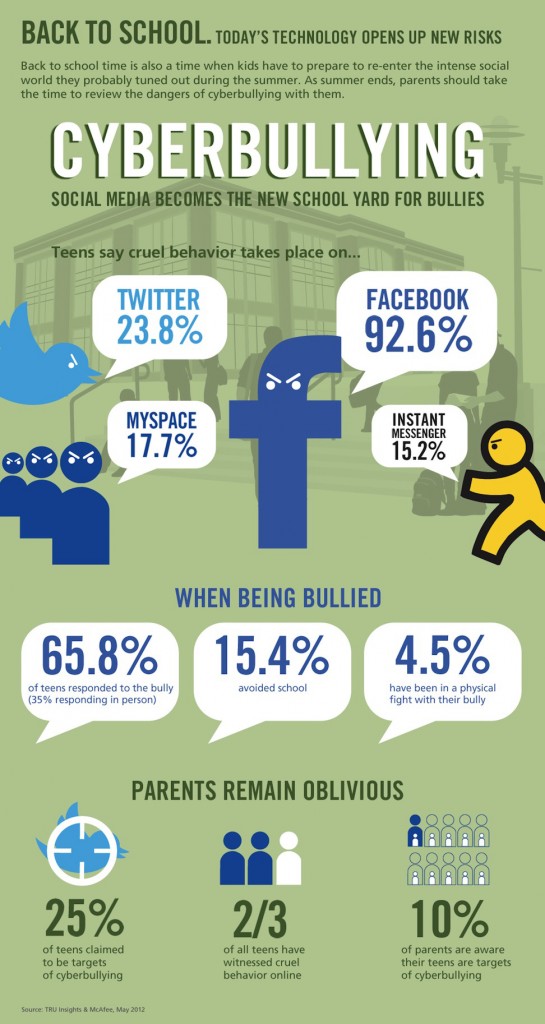
For about a year, the Glendale Unified School District has been monitoring what it's students have been putting out publicly through social media. By hiring a company to screen students; social media posts, the school district is attempting to stop cyber bullying and is trying to create a safer environment for students on the internet. I do not believe that this decision can be justified and looked at as a good choice by the district. First off, this monitoring isn't much of a problem until they actually take disciplinary action because of what someone puts out on social media. So far, nobody has been disciplined according to the original article, so it isn't a huge deal yet. However, even though no action has been taken on any students, this tracking is unfair to the students and is deeply intruding their privacy and their right to free speech. Yes, some students may say some mean things on the internet, but a school should not be able to take action on what they say outside of school on social media. I believe that if the school will not take disciplinary action, this project is a waste of money and time. If they are not planning on punishing students for their bullying via social media, than why even monitor what they put out in the first place.
If this system was implemented at San Ramon, I would strongly disagree with it and be against it completely. It is not fair to the students that the school can monitor and track every single thing that is put out onto the internet through social media or other ways. I do not see why cyber bullying is that big of an issue in the first place. Yes, statistics do show that bullying in general is a serious issue, but I believe that cyber bullying in specific is truly that awful. If you are receiving hate through the internet, you can just turn the computer or your phone off and tell a parent or a counselor, teacher or principal at school. Bullying is a problem, but I don't think that trying to stop the bullying on the internet is the solution to the problem. To stop bullying, you must stop it at the root. Monitoring social media posts and handing out suspensions or detentions because of what is put out is not a good solution to this dilemma. The schools should teach students about internet safety so that they do not put themselves in a position to be bullied, such as sending nude photos or engaging in rude talk or behavior both online and in person. Teenagers in American society today must learn to be less sensitive about what others say about them and learn to be confident and proud of who they are. Yes, it may seem hard or nearly impossible to do that for some people. but if you don't let bullying bother you, it should stop. Most people are not that cruel and will stop bullying you if they don't see a response from it. If it does continue for a prolonged period of time and it gets out of hand, then resolving it with parents could be an option.